In this guide
A helpful public page is not always the final authority for an individual workplace decision. Read evidence in layers so that you can use each source for what it actually establishes.
The City’s employee handbook explicitly presents itself as informational and recognizes the role of applicable collective bargaining agreements. That makes it a useful example of why a readable overview and a governing document should not be treated as interchangeable.
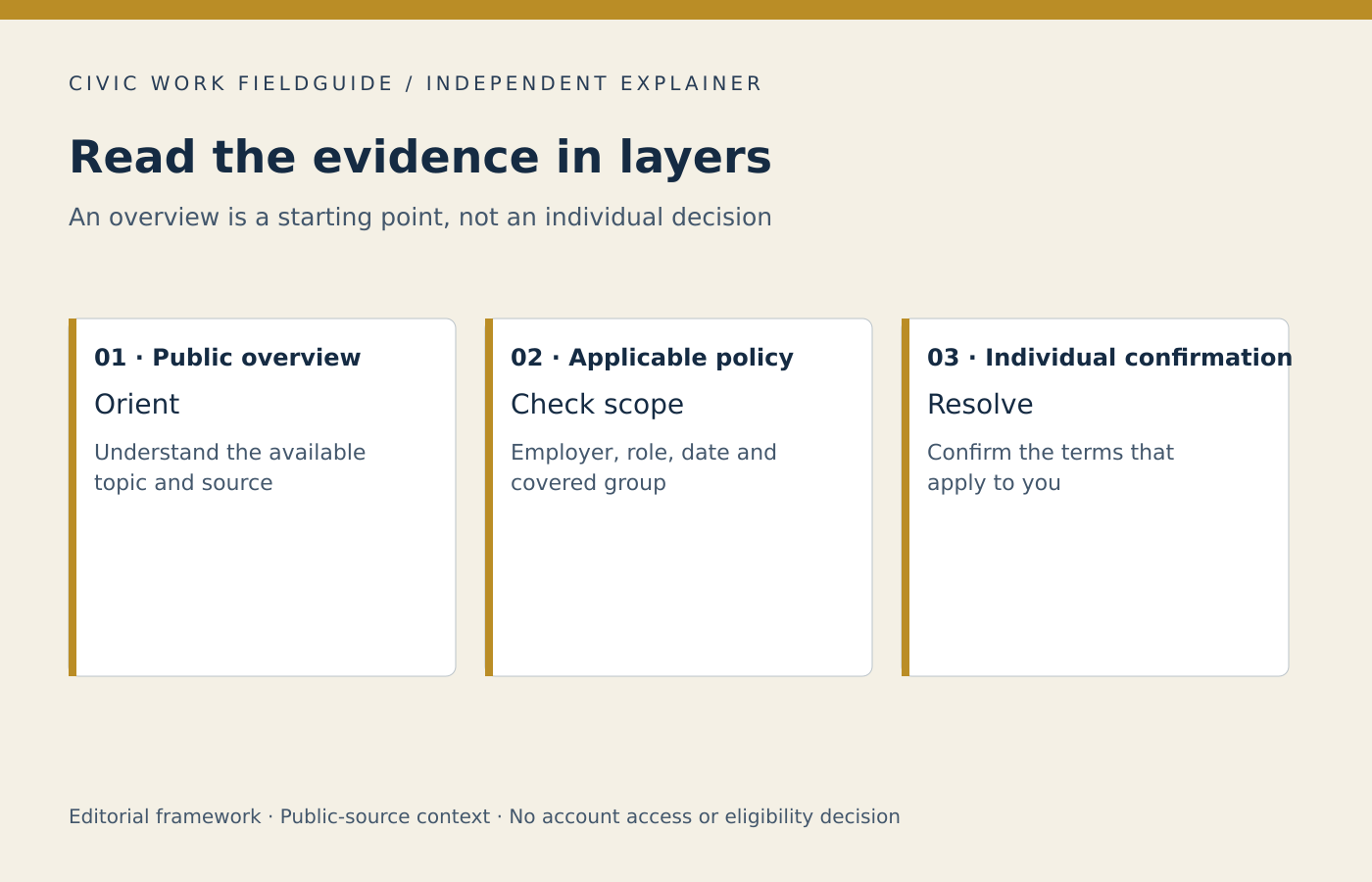
Layer one: public orientation
An overview explains a service, topic or program. It can tell you where to begin and which questions to ask. It may summarize a complicated rule or combine several audiences. Record its publisher, update information and intended readers before applying the summary to yourself.
Layer two: applicable material
The relevant policy, agreement, plan document or program instruction supplies more specific conditions. Check the employee group, effective period and any linked amendments. A precise quotation from the wrong document is still the wrong evidence.
Layer three: individual confirmation
The responsible office or authorized process applies the rule to the actual request, appointment or transaction. Confirmation can establish what the public material cannot: whether your submission is complete, what is approved and when it takes effect.
A worked reading exercise
Imagine an employee finding an appealing development opportunity on a general work-and-life page. The overview establishes that a program exists. The current program instruction identifies the application conditions. The employee’s approval or selection confirms whether they can actually use it. Skipping the middle and final layers can turn an interesting option into an assumed entitlement.
When sources disagree
Do not silently choose one, combine incompatible numbers or attach today’s review date to an old rule and call it current. Keep the exact titles, dates and conflicting point. Ask the responsible source which material governs. Sometimes the apparent disagreement comes from different audiences or periods; sometimes a page genuinely needs correction.
Use the publication’s review date honestly
“Checked September 30, 2026” means we reviewed the cited public material on that date. It is not the source’s publication date, a promise of daily monitoring or proof that a private procedure is unchanged. Our correction contact welcomes a public source reference; it does not need confidential employment records.
Continue with document identity checks, date labels.