In this guide
A commuting benefit can reduce a cost without making a route workable. Begin with the actual reporting location and hours, then compare the full journey in both directions. Civic Work Fieldguide provides a planning framework, not live transport information or a benefit determination.
The City’s work-and-life page describes employee transit support, including an MBTA pass program and Bluebikes membership options. Confirm the current rules for your employee group and enrollment arrangement through the official resources before purchasing something on the assumption it will be reimbursed.
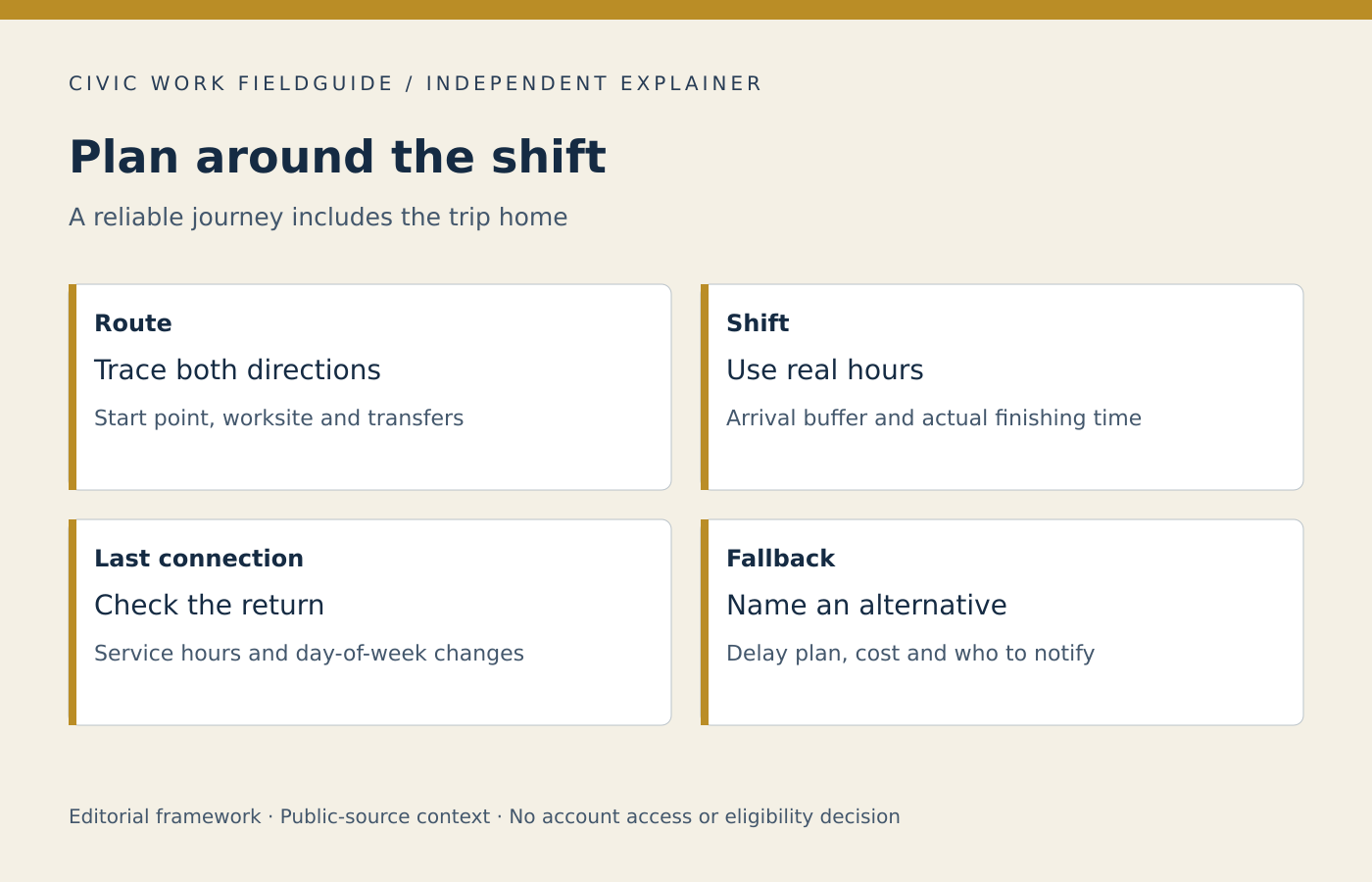
Test four parts of the journey
- Door to reporting point: include walking, transfers and the actual workplace entrance.
- Shift fit: check the service available at the required arrival and departure times.
- Last connection: identify whether the return journey relies on a connection with little margin.
- Fallback: plan for a disruption, a different worksite or weather that changes the practical route.
A fictional comparison
Two employees have the same journey distance. One works regular daytime hours near a frequent service; the other finishes after the most useful connection has stopped. A pass discount can have a different practical value for each person. Comparing only the monthly price misses the more important question: can the planned journey reliably serve the actual shift?
Likewise, an orientation or training location may differ from the regular worksite. Ask which address and reporting time apply to each date. Do not assume a central-office address in a recruitment message is your everyday destination.
Separate fare cost from eligibility
Privately compare the relevant fare option with the number and type of journeys you expect. Then verify the employer program’s eligible pass, ordering process, payroll arrangement and deadlines. This article intentionally does not calculate individual tax savings or imply that an ordinary retail purchase qualifies.
Recheck when the work pattern changes
A new shift, changed onsite schedule or temporary assignment can make an old choice less suitable. Review the whole route and the benefit’s amendment rules before the next commitment. Use current transport-provider information for schedules and disruption notices; the publication does not monitor services or guarantee travel times.
Continue with confirming reporting details, the broader benefits comparison.